
The most common -- and most expensive -- marine electronics mistake is buying gear that doesn't fit your specific boat. Here's why fitment matters, and how to get it right the first time.
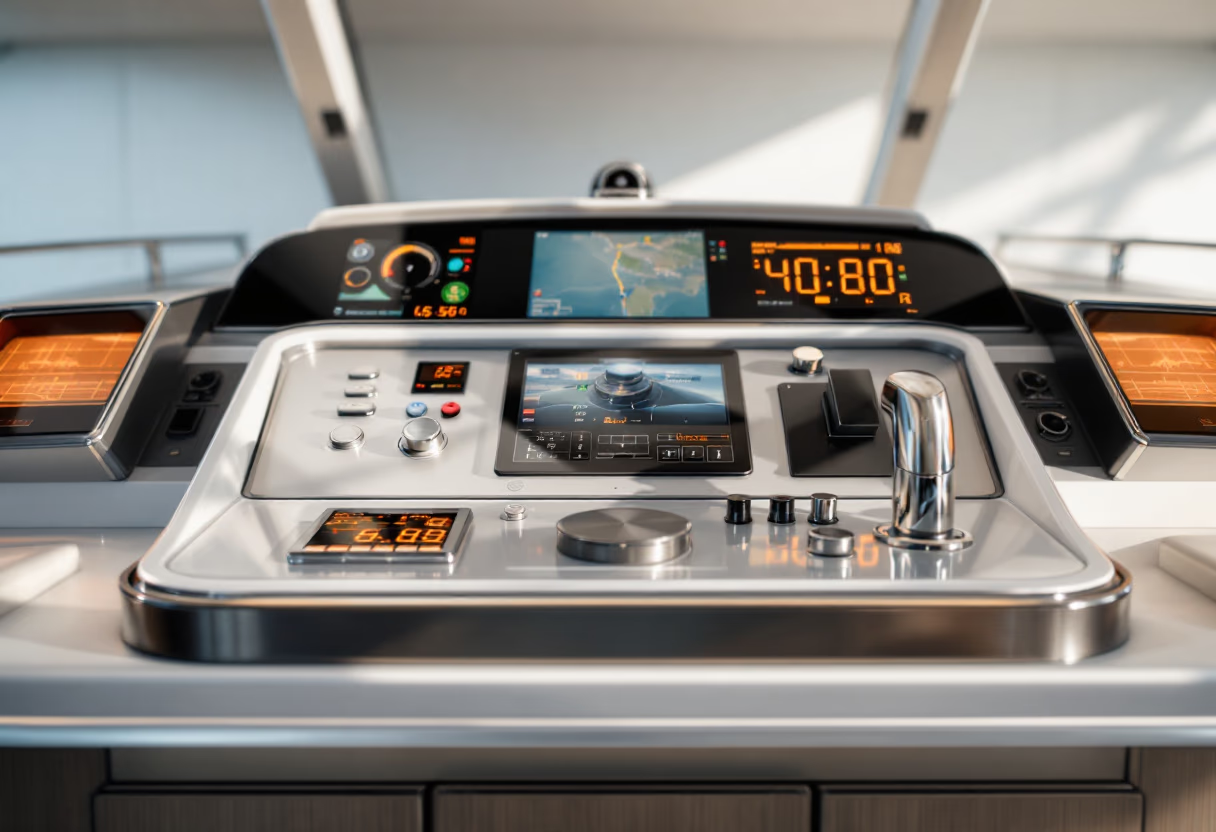
It starts with a simple question: will this chartplotter fit my helm? You find the dimensions in the spec sheet, measure the space on your dash, and if the numbers work, you buy it.
Then you get home and realize the transducer connector is a different type than what you have. Or the mounting bracket doesn't accommodate the angle of your helm. Or your existing VHF communicates over NMEA 0183 and the new plotter only has NMEA 2000. Or the chart subscription you already paid for isn't compatible with this unit's format. The numbers matched. The equipment doesn't.
Marine electronics buyers return or exchange gear at one of the highest rates in consumer electronics. The reason isn't quality. The equipment works. The problem is compatibility -- the failure to verify compatibility before purchase.
This happens because marine electronics compatibility isn't just about dimensions. It's about six things:
Physical fitment: Does it fit the helm cutout or mounting location? Does the bracket work at your helm angle? Is there enough depth clearance behind the dash for cable routing?
Electrical compatibility: Does the unit work with your boat's 12V or 24V DC system? What's the current draw? Is your existing wiring gauge adequate?
Network compatibility: Is it NMEA 2000 or NMEA 0183? What's the LEN value on your N2K backbone? Are the PGNs compatible with your existing devices?
Transducer compatibility: If it's a fishfinder or combo MFD, does your existing transducer work with this unit? What hull type do you have? Through-hull, transom, or in-hull mounting?
Ecosystem compatibility: Is this device from the same brand as your existing electronics? Which features require same-brand gear to function?
Chart format compatibility: Does the unit support the chart subscription you already have? Not all chartplotters support all chart formats.
Any one of these can turn a great deal into an expensive mistake.
Spec sheets tell you what the product does, not whether it works for your specific boat. Dealer advice is only as good as the dealer's knowledge of your boat -- which is zero unless they've been on it. Forum research surfaces anecdotes from boats that are probably not yours. The information exists. Pulling it together for your specific boat is the work.
Before you buy any marine electronics, you need to know: your boat's make, model, year, and hull type; what you already have on the boat (chartplotter, fishfinder, VHF, AIS, autopilot, and any N2K devices with their LEN values); your N2K backbone status; actual measured helm space dimensions; how you use the boat; and your total budget including supporting hardware and installation labor.
Most buyers don't have all of this at hand when they're shopping. Most retailers don't ask for it.
First, identify what you actually need -- not what looks good on a spec sheet, but what problem you're solving. Second, check your boat first: measure the helm space, inventory the existing electronics, note brands and model numbers. Third, verify compatibility before you order -- network, physical, transducer, chart format, and ecosystem. Fourth, plan for installation. Fifth, buy with confidence, not with fingers crossed.
We built HelmFit because we got tired of watching boat owners buy the wrong gear. Not bad gear -- wrong gear. Equipment that didn't fit their helm, didn't work with their existing network, or needed a different transducer than what was already installed.
HelmFit starts with your boat: make, model, year. Then it asks about your existing electronics and your goals. Then it matches you to the right equipment -- and tells you specifically why it fits your boat, what else you need to make it work, and who can install it near you. It's not a product filter. It's a fitment check.