
Slow boot times, outdated charts, and missing DSC are just the start. Here's how to know when your boat's electronics are holding you back and what to do about it.
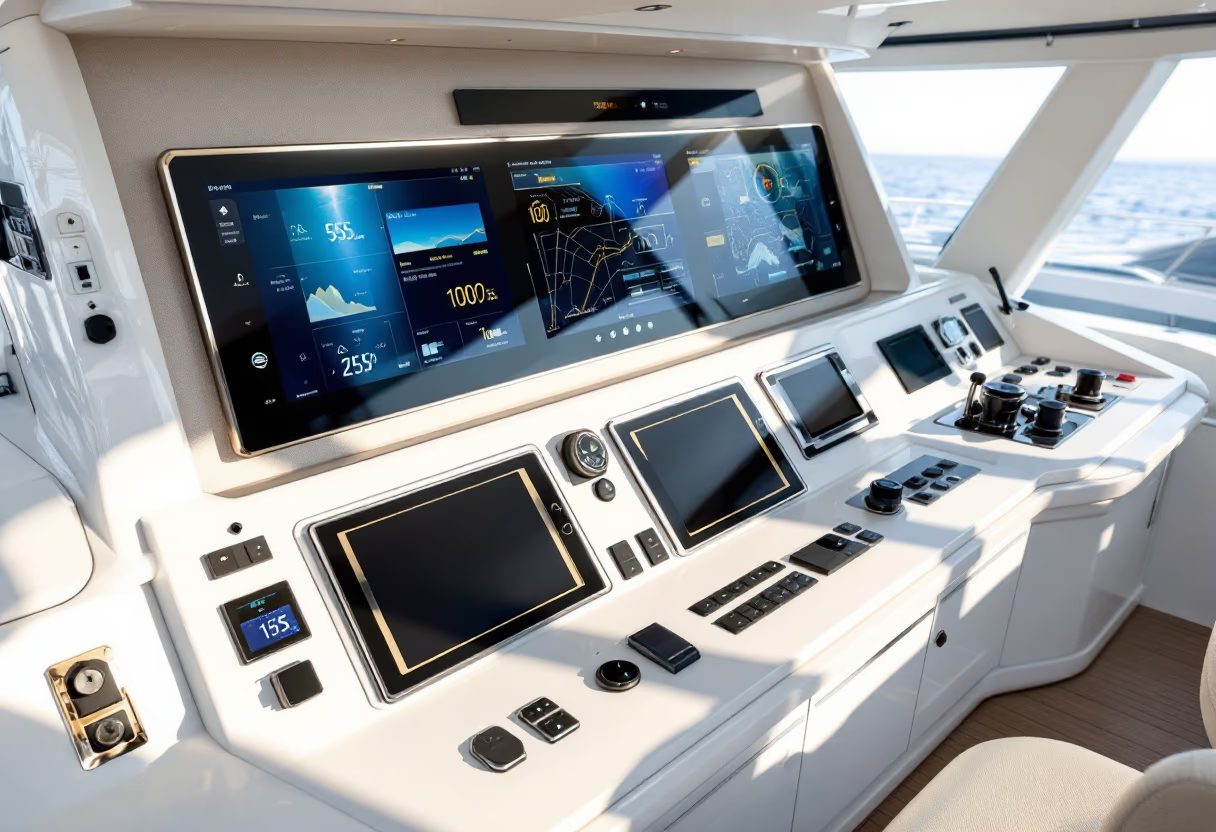
Most boat owners don't replace marine electronics until something breaks. This gear isn't cheap, and if the chartplotter still turns on, it's easy to assume it's fine. But still turns on and actually performing are two different things. Here are five signs your setup is overdue.
Modern chartplotters should boot in under 60 seconds. If yours is taking two minutes or more, the processor is struggling. If your plotter is more than 5-6 years old and boot time has been creeping up, the processor is at end of useful life. This isn't fixable with a software update.
Waterways change more than people expect. New shoaling, updated channel markers, altered navigable depths -- a chart that's even 18-24 months old can be meaningfully out of date. A $1,500 chartplotter running a 4-year-old chart is less useful than a $600 unit running current data.
DSC (Digital Selective Calling) has been a USCG requirement for all marine VHF radios sold in the US since 1999. DSC lets you send a digital distress signal with your vessel's GPS position to the Coast Guard with a single button press. Without it, a mayday call requires you to manually broadcast your position -- a real difference under stress.
Modern fishfinders integrated into a multi-function display (MFD) or networked with a chartplotter let you overlay sonar on your chart in real time. For anyone doing serious fishing or navigating unfamiliar water, this is a legitimate safety and performance upgrade.
Class B AIS -- which transmits your vessel's position, speed, and course -- is a different level of safety. Commercial ships and ferries see you on their displays. For recreational boaters in anything over 26 feet, or anyone who navigates in shipping lanes, Class B AIS is worth the upgrade. Units start around $300.
Tell us about your boat and we'll show you what's worth upgrading